

And yet, in the UK today, roughly a third more men invest than women. Men have £567 billion more invested and just 29% of women reported trading stocks and shares online, compared to 47% of men.
This gap has real impact, not least because of differences in how women and men approach what they invest in. Research shows that many more women than men say that it’s important to them that their investments reflect their values and support positive change. Men are more comfortable investing in defence, nuclear energy, oil and gas. They are also more likely to frame responsible investing in terms of long-term financial returns, rather than by making values-based decisions.
So, to simplify, the more women that choose to invest, the more likely it is that the numbers of people involved in impact investing will increase, and the more opportunities there are to change the world for the better through finance.
The major barriers to address in closing this investing gap are building confidence and considering the roots of financial inequality. Historically women have not been encouraged to feel confident making financial decisions, and investing has too often been dominated by men, and represented as something typically for men.
Because they can generally feel less confident investing, women are also on average more risk-averse, and often favour the security of cash savings, even when investing might be more suitable for their financial needs and plans. Since women on average earn less due to the gender pay gap, and are more likely to take career breaks, they have less income available to invest or take risks with.
Interestingly though, this can also mean that women’s investments perform better – since women are more patient with their investments, they are less likely to be impulsive or jump on investing “trends", such as cryptocurrency.
From nurture to nature: how women’s wealth can impact our future
Women are set to inherit 70% of global wealth over the next two generations. As older generations pass on their assets, women will receive a significant majority of this within the next few decades. This shift is due to factors like longer lifespans and changing family structures, making women increasingly important in financial decision-making globally. Women also open more Junior ISAs than men, so will be in control of the savings and investments being passed on to the next generation.
This means we have a unique opportunity to close the gender wealth gap, as well as there being a huge shift in who will influence where money flows and grows. As banks are rolling back on their sustainability commitments, it has never been more important to direct money towards climate-positive investments.
Investing builds wealth, which creates freedom. Investing is also activism. We have power in where we choose to direct our money. A better world is possible, but only if we invest in it.
Investing can sometimes seem soul-less. Buying and selling stocks, with companies you’ve never heard of, with no idea where that money is going. Mainstream investment portfolios, even some claiming to be green, fund damaging industries such as fossil fuels, weapons and tobacco. But it doesn’t need to be this way. Every investment tells a story about what we value, and women are uniquely positioned to shake up the investment landscape and redirect money towards systems that work for people and the planet.
Investing in nature
Women have long been at the forefront of environmental activism. Women such as Rachel Carson, Vandana Shiva, Jane Goodall, Yugratna Srivastava, and Greta Thunberg have done groundbreaking scientific, academic and activist work to shine a light on the people, animals and ecosystems being corrupted and damaged by human activity.
Indigenous women have also been invaluable in providing ancestral knowledge and practices that build resilience in our changing climate, for example, by preserving crop biodiversity or protecting vulnerable species.
Women and girls are also more likely to be disproportionately affected by climate change. Reports show that by 2050, up to 158 million more women and girls could be pushed into poverty due to climate change, which is 16 million more than the total number of men and boys.
At a political level, research shows that women’s leadership results in more action being taken to tackle the climate crisis. In business, gender-diverse firms have better environmental reporting and climate governance, and they make more investments in energy efficiency and renewables.
We also know that women are more likely to give to charity and support causes they care about. Impact can be increased even further by investing and supporting charitable organisations’ long-term growth.
What this means is that there’s a huge untapped market of potential investors who care deeply about the environment and can prioritise purpose, as well as building wealth.
Meet the women investing with Triodos

“The biggest influencing factor in my decision to open a Triodos ISA was my desire to put my money where my values were. As an elderly woman I feel like I have very little influence on the wider world... My two points of leverage are my personal influence on people I know, and my money.”
- Sue, Triodos investment customer
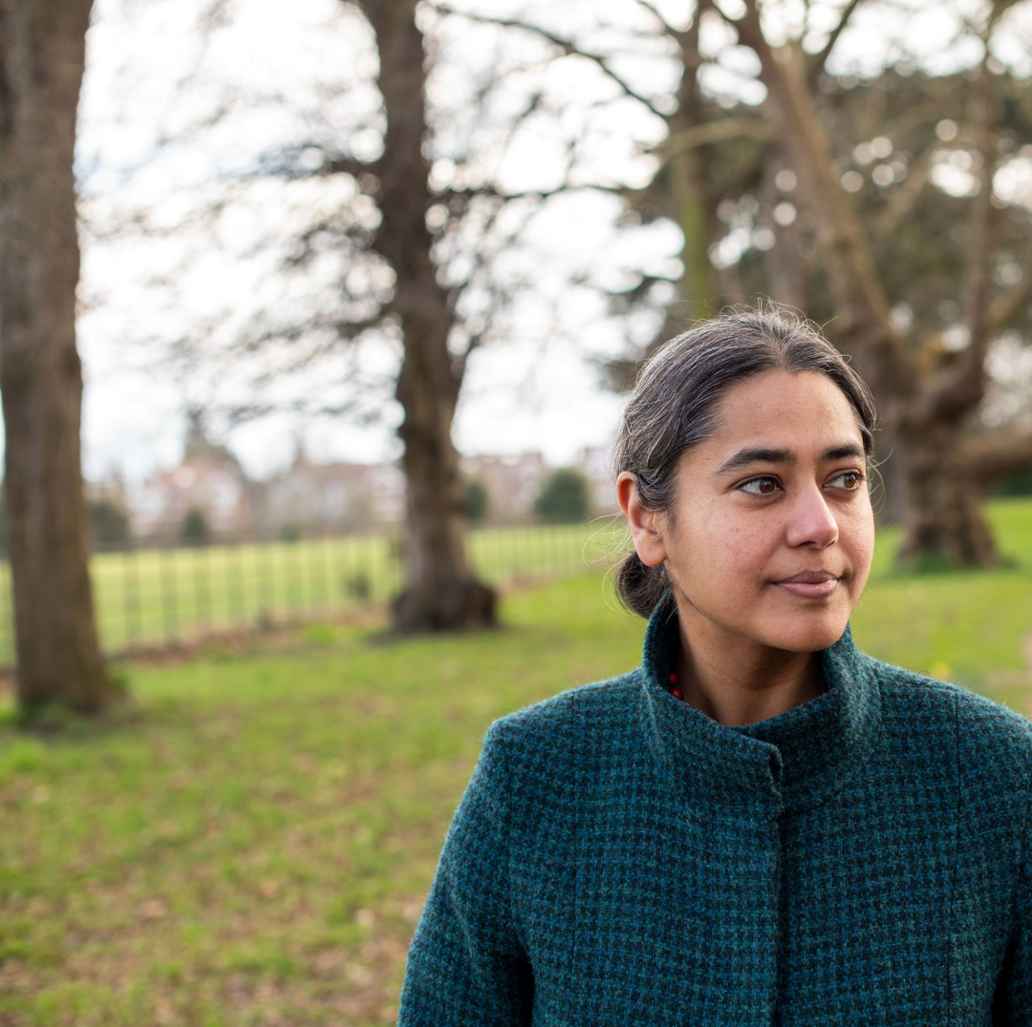
“I work hard for my money
and I don’t want it to fund wars or genocides. I want to live as ethically as possible in all aspects of life, including my finances.”
- Meerat, Triodos investment customer
Empowering women to invest
We’d love to support more women in feeling confident about investing. Please comment below or reach out to let us know what information or resources would help you on your investing journey.
You can find a series of educational articles below to get you started, and we suggest that you can seek independent financial advice if you aren’t confident in making decisions about your finances.
Is investing right for me?
Choosing Impact Investment funds
Five ways to help understand impact investment risk
Triodos investment calculator
How cash ISA limit changes could affect your investment strategy
Thanks for joining the conversation.
We've sent you an email - click on the link to publish your post.