
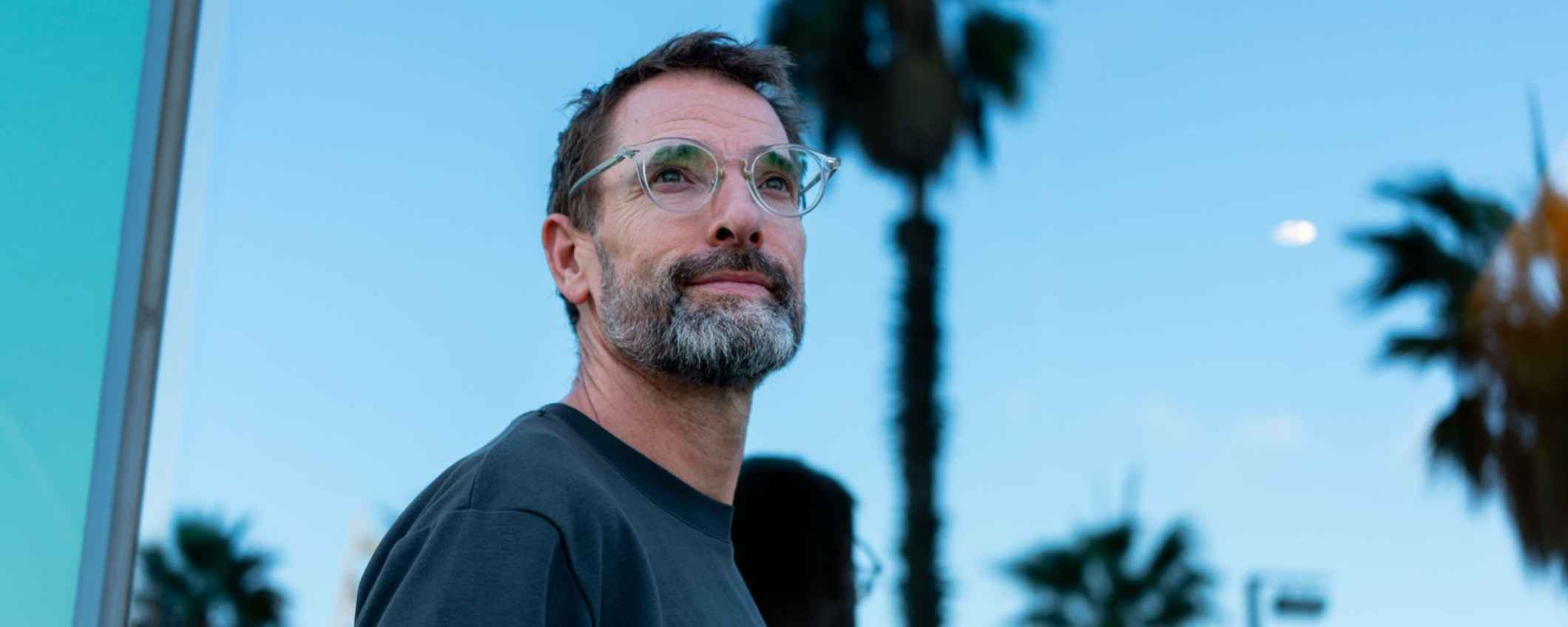
“I never wanted to work in the financial system, but that’s where the power lies,” says the chief economist at Triodos Bank.
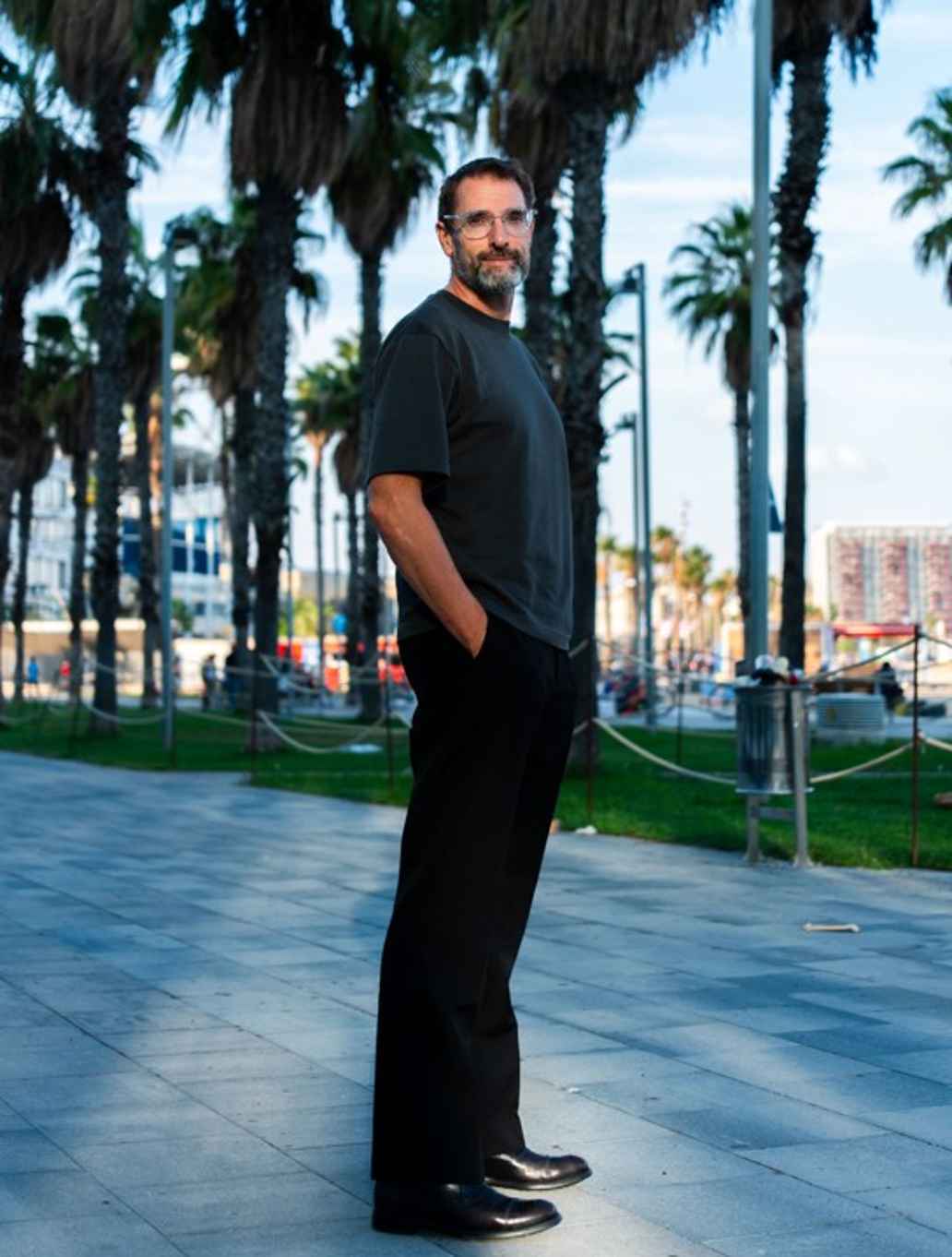
Stegeman trained in philosophy and economics. He worked in a union, in public administration and at other financial institutions before joining Triodos. His latest book, This Is Not a Crisis, published in Dutch, argues that today’s problems are not separate crises but the result of how we have designed our economy, and sets out proposals for one that works.
When damage counts as growth.
This summer, the UK and Europe lived through a run of record-breaking heatwaves that disrupted public transport and water supplies. Damage like that can be counted in economic terms. Stegeman’s point is that the most serious consequences don’t come with a price. People and animals die; forests burn. We often forget about those consequences, or don’t see them because they’re not happening in front of us.
The costs that can be counted go well beyond the wreckage. He lists “the immediate effects, such as inflation from rising food prices because of droughts, logistical problems and a loss of productivity that is less visible in the statistics.” Extreme heat makes it harder to rest and to travel and cuts the hours people can work outdoors.
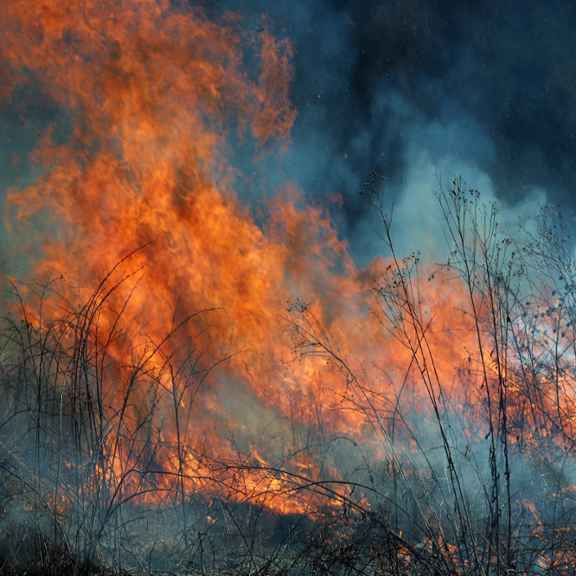
The contradiction of this is that part of the money spent repairing the damage is counted as growth. “If you have a lot of destruction, you have to rebuild, and it’s more expensive,” he says. That rebuilding is “a second cost that is counted as economic growth.” After a fire, for example, the overtime of the people who fight it, the materials bought and the repairs all add to GDP.
“Much of what we count as economic growth is damage, restoration or adaptation. It doesn’t improve our lives,” he says. “The economic headlines look the same, but what it means for people is completely different.” He calls it a “perverse effect” in the very concept of economic growth: we can grow without progressing.
The cost of a hot summer.
The models we use to describe and understand the economy, however limited, can also serve to challenge them. In Hot Summer Economics, a report by Stegeman and the Triodos Bank team of economists, it is estimated that extreme temperatures and droughts in the summer of 2026 could cut around 1% of European GDP. That is comparable to the growth that was projected.
The calculation caught the attention of the media and politicians, which we hoped would be the reaction. “The essential thing is to speak in the language of conventional economic discipline and also of politics,” he says
But statistics can also hide part of the problem. If extreme temperatures hit two years running, the second year can cause the same losses without showing up as a new drop in growth, because the starting point is already lower. “That’s when we no longer make headlines,” he admits.
“People tend to forget very quickly that this extreme weather is not an exception, it is climate change, and we should adapt to the new structural situation,” he says.
He calls the usual response a doom loop. “We have extreme weather, it damages our economy, and we think we should have more growth and competitive companies. And that’s how we make the problem worse.”
The rules we designed
Why is it so hard to change course? Stegeman says we have organised the economy so that it depends on growth. Governments rely on it for tax revenue, workers for jobs and better pay, and companies for their profits.
“But that is not a law of nature, it is how we designed the economy,” he says. And that is where the opportunity to change the rules opens up.
The same goes for how we cope with shocks. “Economic processes are not built for resilience, but for efficiency,” he says. “Resilience means you need buffers, you need to be able to adapt, and none of that is efficient.” Making only small adjustments, he warns, means adapting partially to a problem that is structural.
The danger, for Stegeman, is assuming none of this can change. The problem comes when we stop recognising the value judgements the economic system rests on, and accept them as if they were natural laws.
What can the banking sector can do?
This is where finance comes in. Stegeman says that even when the financial system takes sustainability into account, it usually does so from the perspective of risk, not the positive impact on society or the environment. “Given the structure of the financial system, there is no incentive to do it differently.”
At Triodos, the starting point is different. “Essentially, it’s about values. In the current system, there is no rule that prevents you from making different decisions,” he says.
“We started with impact rather than benefit. And of course, we have to get enough profit to pay the salaries.”
But it also means keeping money connected to everyday life. “We don’t make money for money’s sake. We don’t just let money circulate in the financial system; we return it to the real economy. This is how we try to make the world a little better.”
He is candid about how hard that is. “It’s really hard work. After 46 years, not so many people follow us.” Even so, he believes it is the way to inspire people, including those with political responsibility, and that “piece by piece we will be able to change the system.”
A transition that includes everyone
For Stegeman, the most important thing is that the ecological transition is socially inclusive. “People should experience, but also feel, that they are included and cared for,” he says. Otherwise, it becomes an elite project, and “that will undoubtedly fail.”
Part of the answer, he suggests, is better basic services. “In societies where basic services are better and where income inequality is lower, material progress is less important. Because people have a good life.”
He knows a single bank will not transform the system. His aim is to change the world in “tiny, tiny pieces.”
After all, lots of tiny pieces can add up to a lot of pieces.
Thanks for joining the conversation.
We've sent you an email - click on the link to publish your post.